
Going Above and Beyond to Meet Our Customers’ Needs
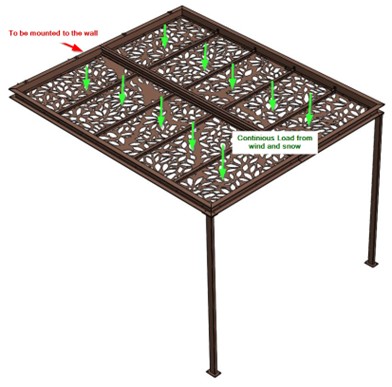
In our industry, the end goal of every project is to deliver an aesthetic product that enhances or refreshes an existing or new environment. But have you ever stopped to ask what else matters besides the final appearance of a decorative product?
Most competitors focus mainly on the architectural side. They offer only a few material thickness options and rely on customers to choose what they want—often without considering engineering requirements. But why is the engineering aspect just as important as the architectural one?
The answer lies in customization and the unique needs of each customer.
Same Product, Different Environments — Why That’s a Problem
Take this example:
Should a pergola be designed the same way for a customer in California as it is for a customer in Illinois?
With the standard, one-size-fits-all solutions most companies offer, both customers would likely receive the same product. But their environments couldn’t be more different.
- California (coastal): High exposure to salty air and strong sunlight
- Illinois: Significant wind loads and heavy snow
Because of this:
- The California customer needs a high‑quality primer and powder‑coat finish to protect against corrosion and UV exposure.
- The Illinois customer needs the same durable finish—but also material thickness adjusted to withstand wind and snow loads.
This is exactly where Titan Cut engineers bring added value.
Engineering Expertise That Makes a Difference
Our team includes experts from a variety of engineering fields—automation, heavy equipment, robotics, and more. With their deep knowledge of materials, especially sheet metals, we use Finite Element Analysis (FEA) daily to ensure every project is optimized for real-world conditions.
You might wonder: What is FEA?
FEA, or Finite Element Analysis, is advanced engineering software that simulates how forces such as wind and snow affect a structure. It helps us calculate stresses, displacements, and structural performance before anything is built.
A Closer Look: The Illinois Pergola Example
Since wind and snow are the dominant factors in Illinois, choosing the right material thickness is critical. Good engineering practice requires calculating the maximum expected load on each panel. Once this load is determined, our engineers apply it to the panel in FEA.
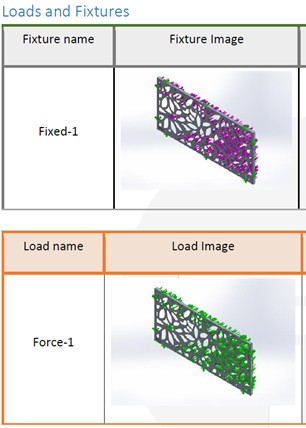
This simulation shows:
- Stress distribution across the panel
- Displacement, or how much the panel bends under load
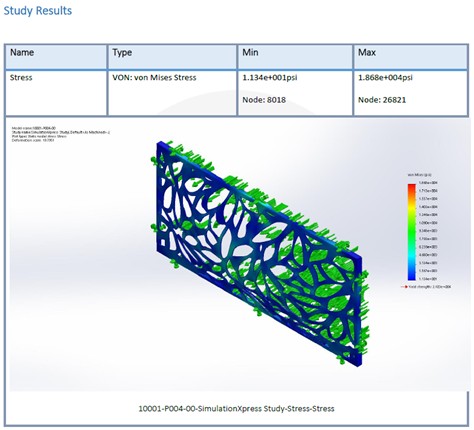
These results tell us whether the chosen material and thickness are sufficient. If not, we make the necessary adjustments—thicker metal, a different material, or refinements to the pattern or cutouts.
Even if stress levels are acceptable, excessive displacement can cause problems. FEA helps us verify whether patterns need revision or if a thicker material is required to ensure long‑term performance.
Precision, Not Overdesign
We take every project seriously and allocate the right resources to determine the optimal materials and thicknesses. Yes, we could simply use thicker metal everywhere—but that would be unnecessary, costly, and wasteful for our customers.
There are no “standard” or “repeat” projects at Titan Cut. We welcome new challenges—put us to the test!
And we don’t limit FEA to snowy regions. We even use it for customers in the Caribbean. If you’re wondering why engineering matters even in paradise, stay tuned—an upcoming news will walk through that full project study.